Chromatic Covers Notes, Strobe Shows Error
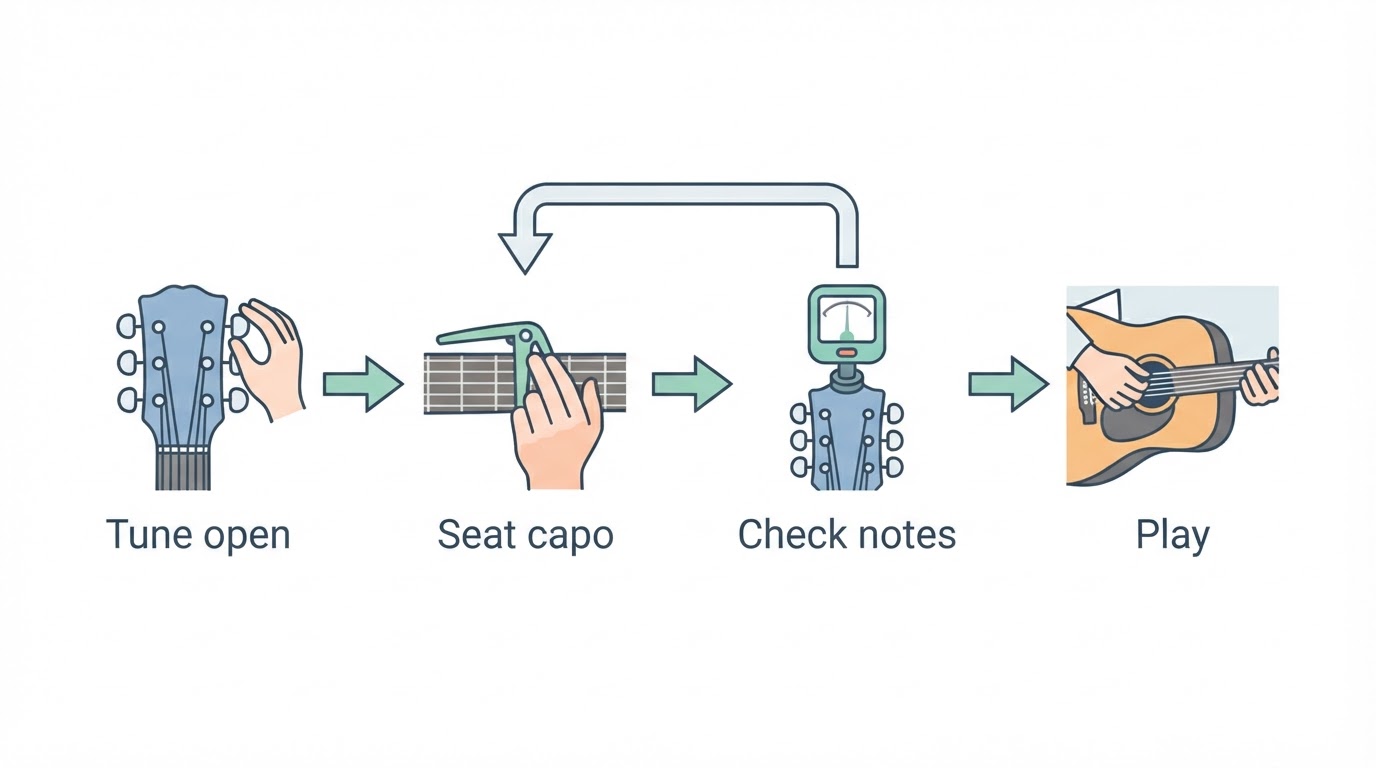
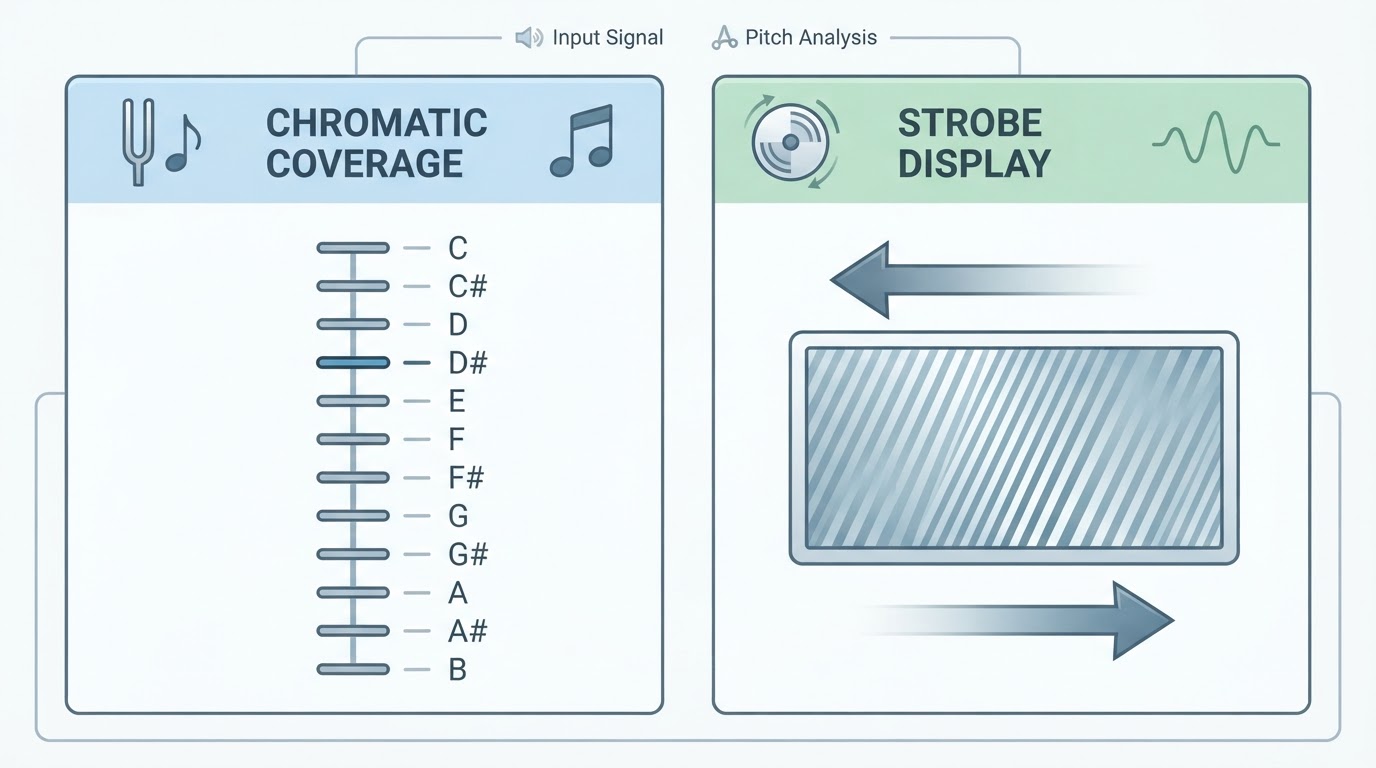
A chromatic tuner names any of the twelve pitches in an octave, one note at a time, whatever string you play and whatever tuning you are in. BOSS lists "Chromatic mode for tuning to any pitch" on the TU-3 product page, and keeps separate Guitar and Bass modes for players who already know which string they are turning. On a guitar in standard tuning, that coverage means the display can name the open fifth string's A2 and the note you get by fretting it, and can say whether either is sharp or flat.
A strobe display reports how far the string is from the target note. Peterson's StroboStomp HD product page describes a pattern that travels left when the note is flat and right when it is sharp, and tells players to adjust until the pattern is as close to still as possible.
Those are two different properties. Coverage says whether the tuner can name the note you played; display says in what form it reports the error. A tuner can hold both at once, and the two pedals below do.
One Pedal Can Be Both Strobe and Chromatic
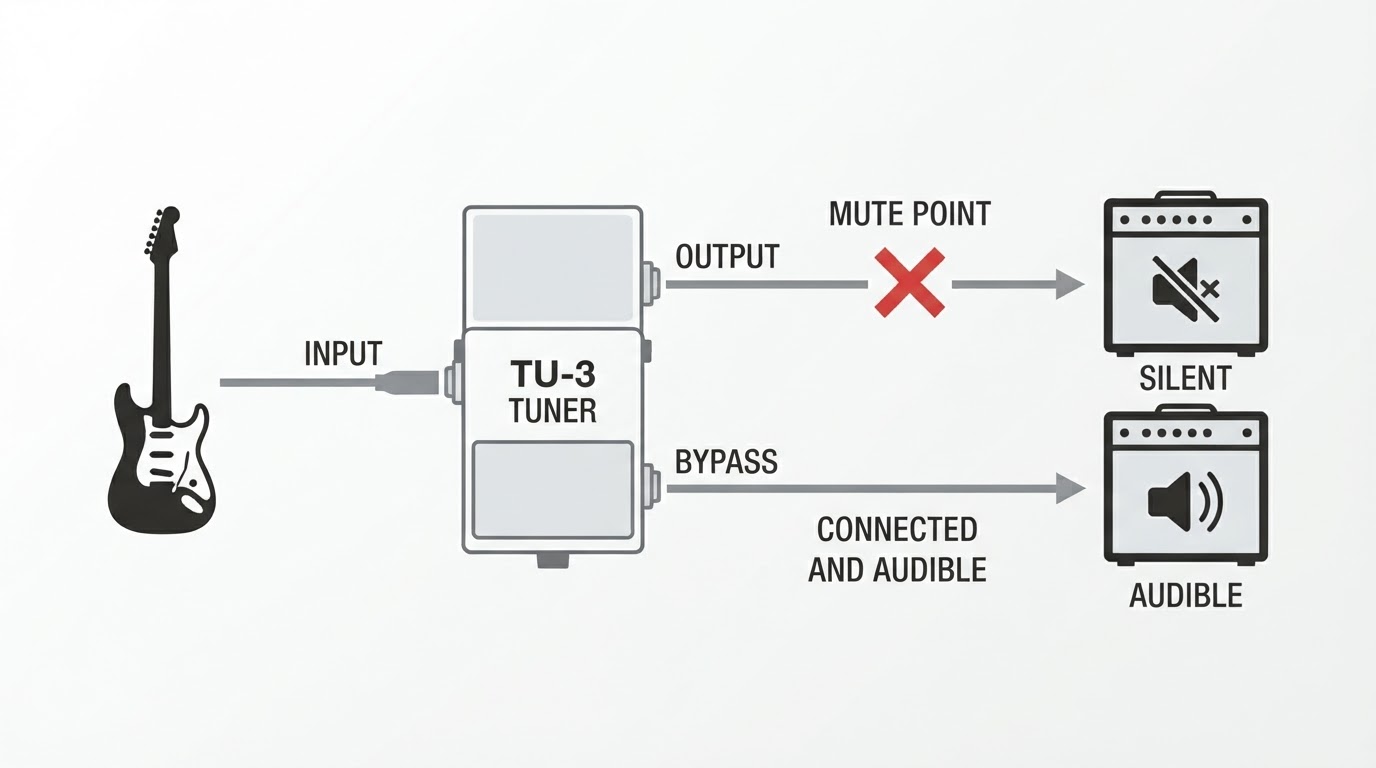
The BOSS TU-3 is a chromatic pedal tuner with a 21-segment LED meter that offers both Cent and "strobe-style Stream" options. BOSS also lists a Guitar mode, a Bass mode, an Accu-Pitch Sign function that lights when the pedal judges the note to be at the target, and an output that mutes while the tuner is engaged. The published accuracy for the TU-3 is plus or minus one cent.
The Peterson StroboStomp HD starts from chromatic equal temperament. Its product page describes the default EQU preset as standard chromatic tuning and equal temperament for regular or alternate tuning, with 100-cent intervals and no Sweetening applied. Presets beyond EQU change the target rather than the display: Sweeteners shift the aim point by cent offsets for specific instruments, and Guided Tunings replace note names with string numbers for drop, open, and other alternate tunings.
That distinction matters when you compare the two pedals on the same string. On EQU, the StroboStomp HD aims at plain equal temperament. Select a Sweetener and the target shifts by the offsets Peterson built into that preset, so the strobe settles on a slightly different pitch than the TU-3's cent meter calls correct. Neither reading is wrong; they are aiming at different targets.
A moving segment on a meter is easy to draw, and an animation that looks strobe-like does not by itself say how the pedal measures error or how finely it displays it. What each maker publishes is a stated accuracy for one model, quoted below.
What the Two Manufacturers Publish
Published specification | BOSS TU-3 | Peterson StroboStomp HD |
|---|---|---|
Display | 21-segment LED meter with Cent and strobe-style Stream options | High-definition strobe display |
Stated accuracy | Plus or minus 1 cent | Within 0.1 cent |
Pitch coverage | Chromatic mode for any pitch, plus Guitar and Bass string modes | Chromatic equal temperament (EQU), 100-cent intervals, no offsets; Sweetener presets per instrument |
Both sets of figures come from the two makers' own product pages, read on October 25, 2026. They are manufacturer claims about these two models, not bench measurements taken for this article, and they are not a class-wide rule for tuners with a strobe-style display.
A cent is one hundredth of a semitone, so one cent at A4 (440 Hz) works out to about 0.25 Hz and a tenth of a cent to about 0.025 Hz. Those figures are arithmetic from the definition of a cent, not readings taken from either pedal. These calculations do not measure either pedal's display increments or actual performance, so treat each stated figure as what one maker claims for one model.
How to Read a Moving Strobe
Peterson's product page gives the direction for HD models: the pattern travels left when the note is flat and right when it is sharp. The page also says to aim for a pattern that is as close to still as possible, and explains why total stillness is rare: string pitch is never completely stable, so the display keeps showing small movement even when the note is close.
A pattern that keeps travelling in one direction means the string is still off. A pattern that shivers around roughly the same spot without drifting is what a near-still reading looks like on an HD model; that small movement is the display following an unsettled pitch, not confirmation that the string has reached the target.

Practically, that means small turns of the peg and a moment for the reading to settle before you turn again. Plucking with similar force each time and damping the other strings keeps the reading about one string rather than the whole guitar. On the TU-3, the Stream option renders a moving segment indicator on the same meter, and the Accu-Pitch Sign indicator lights when the pedal judges the note to be at the target.
Compare Two Tuners on the Same Terms
Four things have to match before a strobe reading and a meter reading mean the same thing.
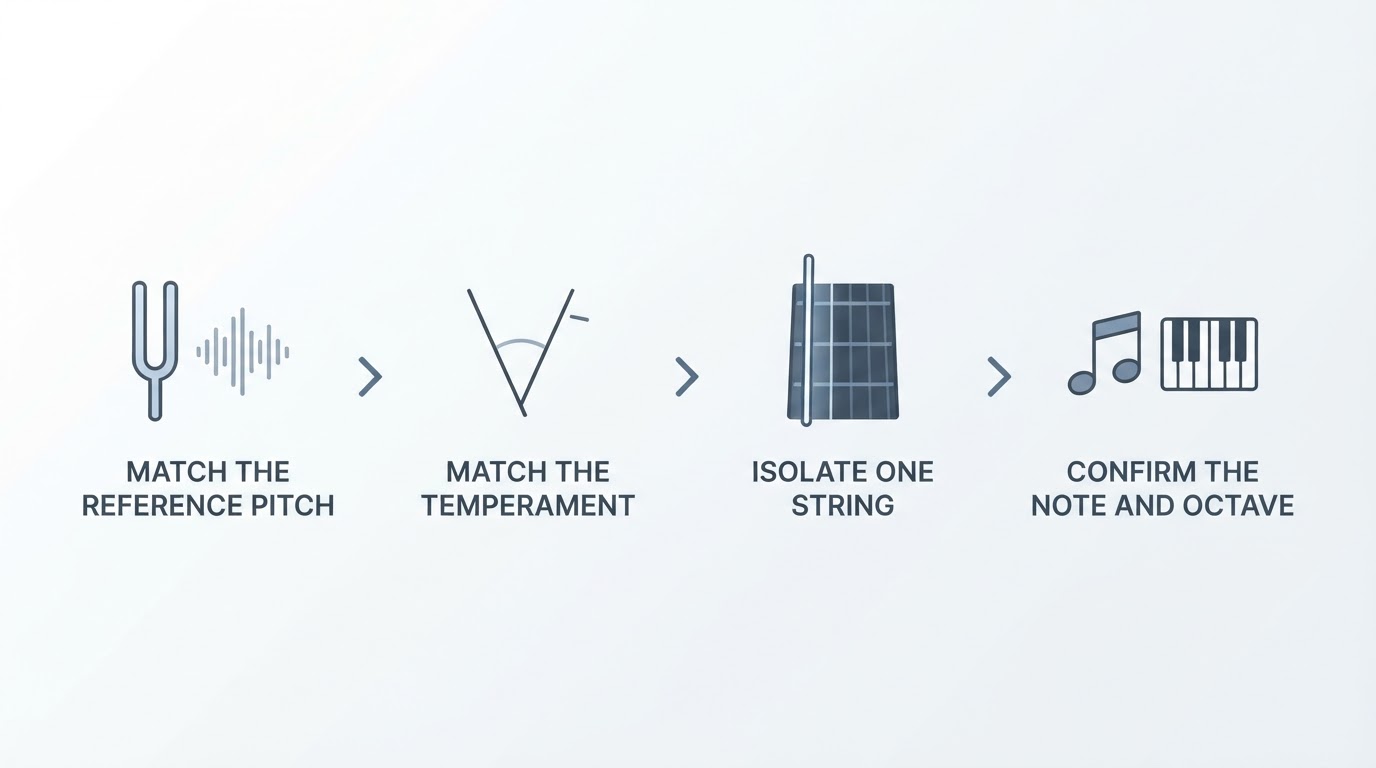
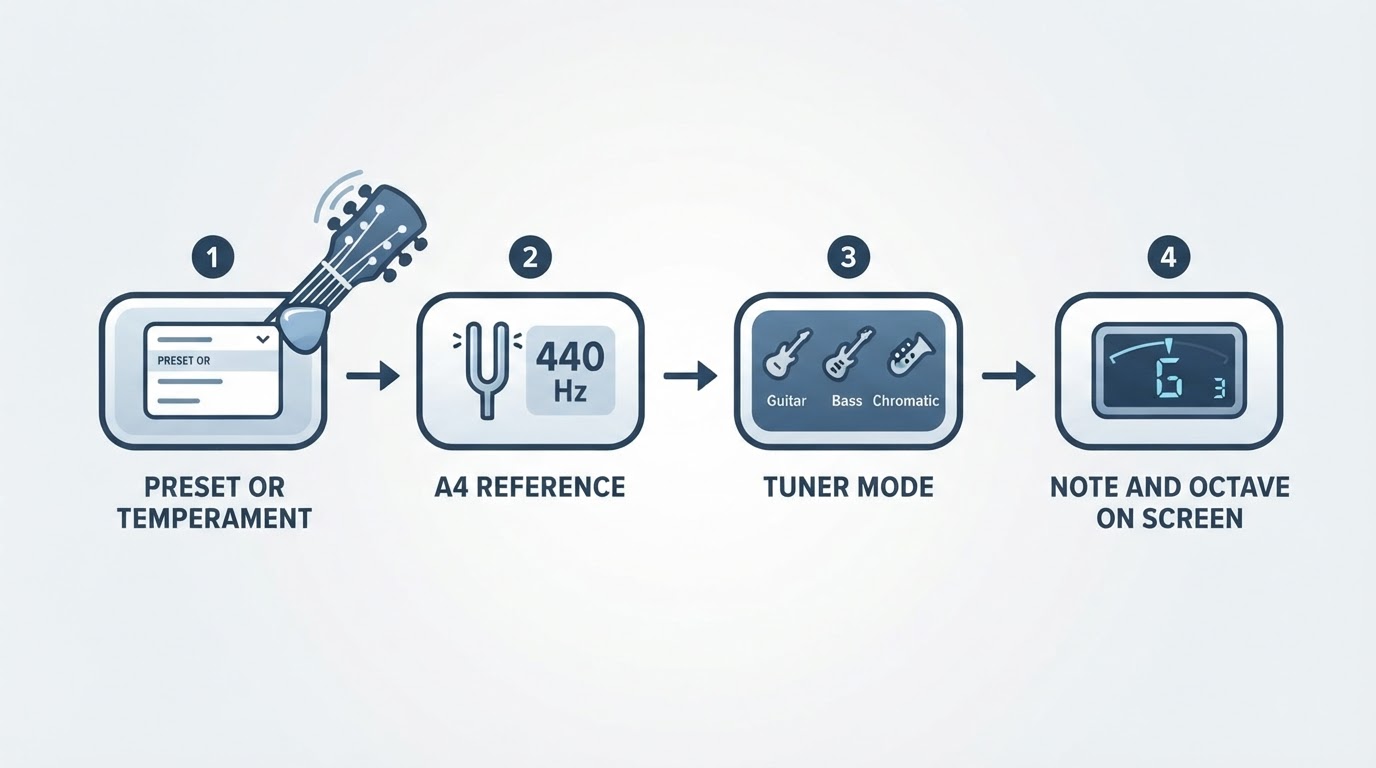
- Reference pitch. The StroboStomp HD ships at A4 = 440 Hz, and the TU-3 page consulted here does not state a reference setting, so check your unit's manual rather than assuming the two are aligned. Setting the A4 reference is the first check when two tuners disagree by a cent or two.
- Temperament. Compare EQU against a cent meter, or compare a Sweetener against a target built the same way. Mixing the two produces a disagreement that says nothing about either display.
- One string, one pluck. Isolate a single string and use a similar attack so both tuners read the same pitch event.
- The same note and octave. A tuner that names the right letter in the wrong octave still looks plausible, so confirm the octave before comparing error figures.
Once those match, the remaining differences are the ones the specifications describe: coverage, display, and the extra modes each maker lists. If you are choosing between a strum check and one-string-at-a-time reading, that is a separate mode question covered in the polyphonic versus chromatic comparison.
What a Tuner Display Cannot Fix
No published accuracy figure removes an error that belongs to the guitar: a string that binds in the nut, a saddle that has drifted, or intonation that was never set. A high-definition strobe keeps showing movement on a guitar with those problems. Some residual movement is normal, since pitch is never perfectly stable. What the display shows is the measured pitch offset relative to the selected target; the reference or preset, the input, and the instrument's behavior still need checking, so drift alone does not diagnose the guitar or the tuner. Check the fretted note at the 12th fret before deciding the tuner is wrong.