Why the Wrap Matters More Than the Knot
On a conventional post, the coils help grip the string and set its break angle over the nut. Too much slack or overlapping wraps can make tuning less stable, but a poorly cut nut or bridge friction can cause the same symptom. Before following any wrap diagram, identify your post type. Fender's setup guide distinguishes standard, vintage and locking tuners; Taylor's steel-string guide gives a different wrap count for bass and treble strings.
Know the Post Before You Wind
Each tuner design grips differently, so look before you touch the string.
Standard post with a side hole
The string passes through a sideways hole in the post. Leave enough slack for a few orderly turns, and use the guitar maker's recommended tie or kink rather than assuming every tuner needs the same knot.
Slotted (split-shaft) post
The end of the string goes down into a hole in the top of a split shaft, then bends into the slot before winding. Its length and the wrap path differ from those of a side-hole post. Check the specific tuner's instructions before cutting: a too-short end may not grip.
Locking tuner
A clamp or cam grips the string mechanically, so it normally needs little or no wrap. Follow the mechanism's own instructions for engaging the lock and trimming the end. StewMac's locking-tuner guide illustrates several designs.
Step by Step: How to Wrap Guitar Strings Around a Post
These steps are for a standard side-hole post on a steel-string guitar. Vintage split-shaft, slot-head, locking, and classical-guitar tuners need their own method. If your guitar has a floating bridge, changing one string at a time may help keep its setup stable.
- Route the string to the correct peg, keeping it seated in its nut slot.
- Pull the string through the hole and leave enough slack on the playing side for several turns. Do not cut by a universal inch measurement: post spacing and string gauge vary. Taylor, for example, specifies different slack and wrap counts for bass and treble strings.
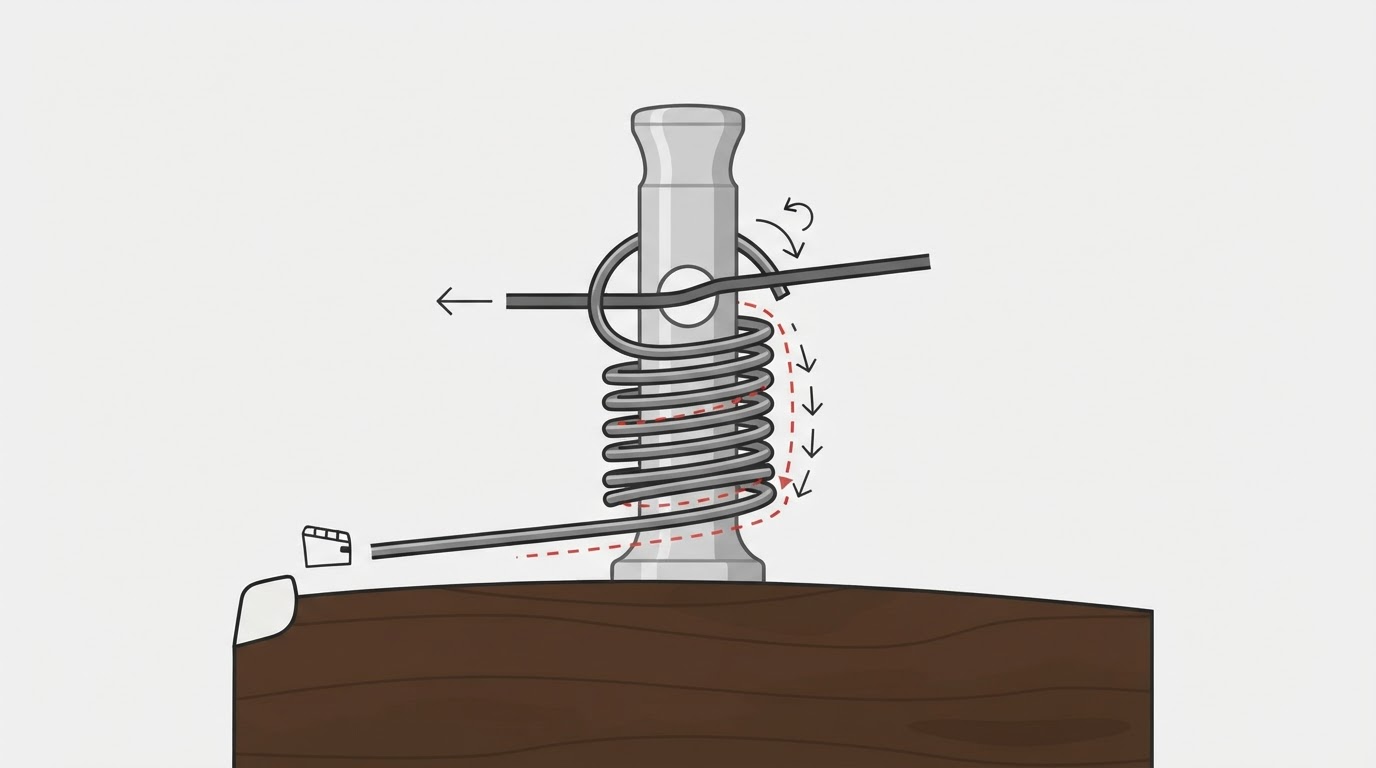
- Bend the free end at the post. If your manufacturer specifies a locking tie, follow its diagram: Fender's standard-key instructions loop the string underneath and back over itself. Do not assume one first-wrap direction applies to every method.
- Wind in the direction that lets the string run cleanly from its nut slot to its post. Guide each new coil below the previous one without crossing or piling up.
- Tune gradually to pitch, then gently seat the string and retune until it stays stable. Trim the excess end safely after it is secure.
Direction and the Descending Wrap
On a conventional post, the working coils normally descend toward the headstock face, providing a consistent break angle over the nut. Wind in the direction shown by your guitar's manufacturer and keep the string path clean; a six-in-line headstock and a three-per-side layout may not turn the same way. If wraps overlap, detune and rewind them neatly. If the string still pings or drifts, inspect the nut and bridge too.
How Many Times Should a Guitar String Wrap Around the Peg?
No single number fits every guitar: the right amount depends on post height, string gauge, whether the string is wound or plain, and how hard you play. What matters is the result — the first wrap traps the tail, later wraps stay tight and descend without crossing, and the pitch holds after stretching.
Manufacturer examples differ: Taylor suggests two to three wraps for bass strings but about six for treble strings, while Fender recommends at least two or three winds on the first string of its standard-key setup, reducing the number toward the sixth. Those numbers are examples, not one rule for every guitar. Locking tuners generally need little or no wrap; follow your tuner's model instructions.
For a standard post, a locking tie can help prevent slippage without a locking tuner. Fender's illustrated method passes the tail underneath and back over the string; Martin describes a similar under-then-over approach. Follow the drawing for your post instead of forcing a tie onto a split-shaft or locking tuner.
Decision Table: Standard, Slotted, and Locking Posts
Post type | How to secure the string | Typical workable wraps | Main risk |
|---|---|---|---|
Standard side-hole | Use the maker's tie or kink; guide later coils down without crossing | Varies by gauge and maker | Too much slack, crossed coils, or an unsecured tail |
Slotted / split-shaft | Cut to the maker's length, insert the end into the shaft, then wind along the slot | Varies by design | Cutting too short or using a side-hole tie |
Locking tuner | Pull taut, engage the clamp, tune directly | None to one | Extra wraps the clamp does not need; ignoring manufacturer instructions |
When Winding Is Not the Problem
A neat wrap cannot fix everything. If a freshly wound string still slips or drifts, check that the post grips it and that it is seated in the nut slot. A sticky nut slot, bridge friction, or a rough saddle can cause tuning trouble that rewinding will not solve. If a slotted-post string was cut too short to grip, replace it with a fresh string rather than trying to gain more wraps from the short end. For a string physically stuck in its tuner, see our stuck-string troubleshooting guide.
Check the Result and Let It Settle
After wrapping, tune each string to pitch with a clip-on, pedal, or browser tuner. Gently seat the new string, play for a few minutes, and retune. Some initial settling is normal; repeated large drops in pitch suggest checking the string path and hardware rather than simply adding more wraps.
Three FAQs About Wrapping Guitar Strings
Does the first wrap go over or under the free tail?
There is no universal over-or-under answer. On a standard post, Fender's locking tie goes underneath and back over the string, while other manufacturer methods differ. Use the method illustrated for your tuners; later working coils should be tidy and generally descend the post.
Should wraps go up or down the post?
For a conventional side-hole post, guide the working coils down toward the headstock face without crossing them. A special tie may have a different first turn; split-shaft and slot-head tuners have their own path.
Do locking tuners need any wraps at all?
Usually none to one, sometimes a partial turn to keep the string aligned. The clamp holds the string, so extra wraps only add metal that can shift.