
C Standard Guitar Tuning: Notes, Frequencies and Transposition
Lower every string two whole steps from E standard to achieve a heavier, deeper sound. Learn the target notes, feel changes, and how to match each string by ear.
What C Standard Actually Is
C standard tuning lowers every string of a six-string guitar by exactly two whole steps (four semitones) from standard EADGBE. The result is a heavier, deeper sound that sits under many rock and metal recordings.
Narrative Note
"Every string moves the same interval—two whole steps down—so the chord shapes and scale patterns you already know work identically; everything just sounds lower."
Target Frequency Table
Calibration Ref: A4 = 440Hz
| String | Standard | C Standard | Frequency |
|---|---|---|---|
| 6th (Thickest) | E2 | C2 | 65.4 Hz |
| 5th | A2 | F2 | 87.3 Hz |
| 4th | D3 | Bb2 | 116.5 Hz |
| 3rd | G3 | Eb3 | 155.6 Hz |
| 2nd | B3 | G3 | 196.0 Hz |
| 1st (Thinnest) | E4 | C4 | 261.6 Hz |
The Physical Shift
Dropping four semitones does more than change the pitch. It transforms the physical response of your instrument.
Noticeable Tension Drop
Standard strings feel slack and may buzz. Moving to a heavier set (.011–.056) restores standard tension.
Neck Settlement
A big tension drop can cause the neck to bow. Let the guitar sit for a few minutes to settle before adjustments.
Easier String Bends
Lower tension means bends take less force. You might overshoot at first, so a quick warm-up is essential.
Transposed Chords
An open 'E shape' now sounds like C major. Keep this transposition in mind when playing with other musicians.
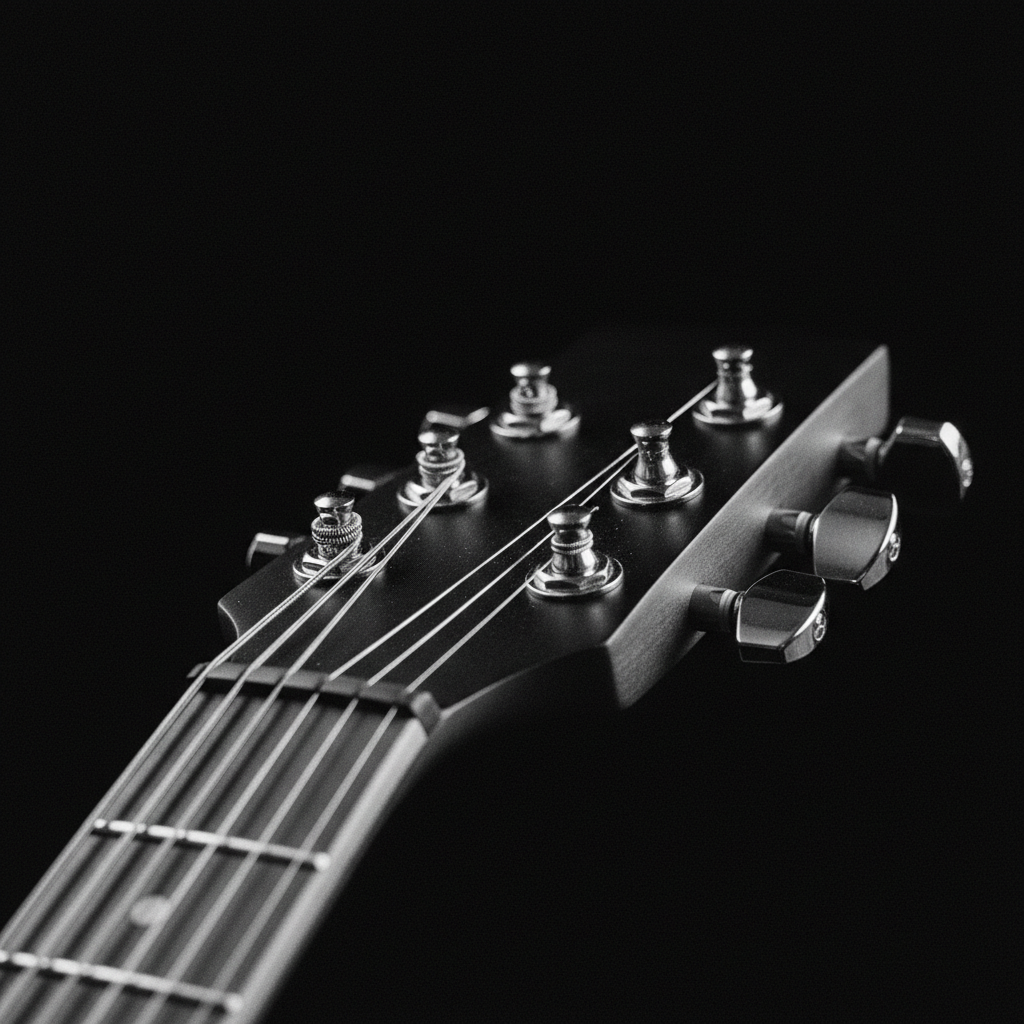
Why the Whole Neck Shifts
Every string in C standard sits two whole steps (four semitones) below its E standard pitch, so the intervals between neighbouring strings are unchanged: the five intervals of 5, 5, 5, 4 and 5 semitones are identical to standard tuning. Only the absolute pitches move. That is why chord shapes, scale patterns and the octave relationships between strings all transfer directly.
Transposition rule
Anything you already play sounds a major third lower than written. Fret 3 in C standard equals fret 0 in E standard for every string, so a shape you know at the nut becomes a shape at fret 3.
Get there
Play the C Standard reference tones on our tuning page and match each string by ear, lowest string first. The player does not listen to your microphone — you simply follow the six tones, from C2 up to C4.
Related tunings
Drop C is not the same tuning: only the lowest string drops the extra distance there, leaving C2 G2 C3 F3 A3 D4.
Relative Tuning by Ear
If you don't have a tuner, you can tune relative to a reference pitch. Start by getting a reference C (C4 from a piano or a tuning fork).
Step 1: The Root
Tune the 6th string to C2. This should sound two octaves below your reference middle C (C4).
Note: Ear tuning compounds small errors. Always verify with a chromatic tuner for professional results.
Interval Verification Matrix
| Reference Point | Target Match |
|---|---|
| 6th string, 5th fret | 5th string (F2) |
| 5th string, 5th fret | 4th string (Bb2) |
| 4th string, 5th fret | 3rd string (Eb3) |
| 3rd string, 4th fret | 2nd string (G3) |
| 2nd string, 5th fret | 1st string (C4) |
Troubleshooting & Calibration
Stability Issues
Strings keep going flat? This is normal after a large change. Stretch each string gently and retune 2-3 times until the core tension stabilizes.
Fret Buzz
Lower tension allows strings to vibrate in a wider arc. Consider heavier gauges (.011–.056) or slightly raising your saddle height to restore clearance.
Intonation
Notes may fret sharp up the neck due to slack tension. A quick saddle adjustment (intonation setup) at a guitar shop will fix the pitch accuracy.
Frequently Asked Questions
Is C standard the same as drop C?
No. C standard tunes all strings two whole steps down (C F Bb Eb G C). Drop C is D standard with the low string dropped further to C.
Do I need to change strings?
Not immediately, but .011–.056 or .012–.060 gauges are recommended to maintain tension and reduce buzz.
What bands use C standard?
It's a staple for Arch Enemy, early In Flames, Devin Townsend, and many doom or stoner metal bands.
Can a non-chromatic tuner work?
Only if it has a 'flat tuning' mode. A chromatic tuner is much easier as it reads any note name directly.
Check Your Notes Against the Reference
Play the C Standard reference tones on our tuning page and match each string by ear. This reference player does not listen to your microphone.
Free to use. No app download or account required.
All Guitar Tunings
Browse the full library of alternate tunings — from Drop D to Open G to DADGAD.
Explore All →C Standard Reference Tones
Play the C Standard reference tones on our tuning page and match each string by ear. This reference player does not listen to your microphone.
Play Reference Tones →Tuner Basics Guide
New to clip-on and mic-based tuners? This guide walks through the basics for every method.
Read Guide →